








You know the drill. A spreadsheet that's one wrong click from chaos, a customer asking for something you thought you had, and that sinking feeling when you're not sure whether you're overstocked, understocked, or just plain guessing.
If that sounds familiar, you're in good company: 43% of small businesses still don't properly track their inventory, according to Firework's 2024 research. That's a lot of guessing.
Here's the thing, though. Finding the right inventory app for small business needs isn't about chasing the flashiest name on a listicle. The "best" app depends entirely on how you sell. So instead of handing you another ranked list and wishing you luck, we're going to give you a framework, a clear way to match the tool to your business so you can decide with confidence. Let's dig in.
Key Takeaways
- An app is lightweight; a system is connected. Know which one your business actually needs.
- Match the tool to how you sell, whether that's in-store, online, or everywhere at once.
- Real-time tracking and multichannel sync matter most for growing retailers.
- Free plans are great for starting out, but they come with real limits.
- Buy for where you're headed, not just where you are today.
What Is an Inventory App for Small Business?
An inventory app for small business is a tool that keeps tabs on your stock so you don't have to do it in your head (or on a sticky note). At its simplest, it tracks what you have, tells you when you're running low, and helps you figure out what to reorder. Most are mobile-first, so you can check counts from your phone while you're standing in the stockroom.
Day to day, a good inventory app handles the core jobs of inventory management: tracking stock levels, helping you forecast demand, ordering and receiving new stock, and managing the twin headaches of stockouts and overstocks. Think of it as the difference between hoping you have enough and knowing you do. When it's working well, you spend less time counting and more time selling.
Inventory App vs. Full Inventory Management System
Not all tools are built the same, and this is where a lot of small retailers get tripped up. On one end, you've got simple tracker apps that count stock and send low-stock alerts. On the other, you've got a connected inventory management system (IMS) that ties your stock, sales channels, purchasing, and accounting together in one place.
Picture a spectrum. A spreadsheet sits at one end, a basic app in the middle, and a fully connected IMS at the other. Where you land depends on how complex your business is. A single-location shop might do fine with a simple app. A retailer selling across a store, a website, and a marketplace or two needs something that keeps it all in sync.
That's where Cin7 sits, at the connected end. We're an IMS, sometimes called "ERP Lite," that scales from small startups all the way up. Not an ERP, mind you, but the connected muscle a growing retailer actually needs.
Why Small Retailers Can't Rely on Spreadsheets Anymore
We get it, spreadsheets are free and familiar. But they break the moment your business gets interesting. Manual tracking simply doesn't hold up at scale, and the numbers back that up. Average inventory accuracy in U.S. retail operations is just 63%, according to Procurement Tactics (citing Myos). That means roughly a third of what your records say is off. Ouch.
The cost of getting it wrong adds up fast. Poor inventory management drains up to 11% of annual revenue on average, Firework reports, largely from stockouts and overstocking. And stockouts don't just cost a sale; they cost a customer. A full 69% of shoppers will leave and buy from a competitor when an item's out of stock. Zoom out, and the scale is staggering: global retail inventory distortion, the combined hit from out-of-stocks and overstocks, reached $1.77 trillion in 2023, per IHL Group and Blue Yonder.
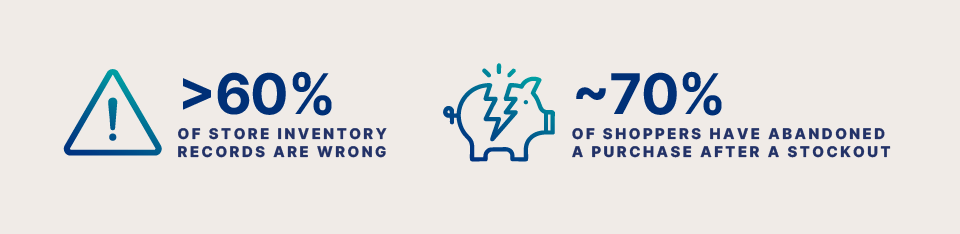
You don't need to lose 11% of your revenue to learn this lesson the hard way. An inventory app catches the gaps a spreadsheet quietly lets slip.
What to Look for in an Inventory App
Not every feature deserves your attention, especially when you're running a lean operation. The goal is to zero in on the handful of capabilities that actually move the needle for a shop your size. Here are the must-haves worth prioritizing, and why each one earns its place.
Real-Time Stock Tracking and Low-Stock Alerts
This is the heart of it. You want live counts that update as you sell, reorder points that nudge you before you run dry, and barcode scanning to keep things fast and accurate. It's the difference between reacting to a stockout and preventing one. And it pays off: real-time inventory tracking improves stock accuracy by roughly 35%, according to Anchor Group's 2025 data. That's a big jump for a feature that runs quietly in the background.
Multichannel and E-Commerce Sync
If you sell in more than one place, and most retailers do, your stock counts need to talk to each other. Small retailers commonly sell across Shopify, Amazon, eBay, and Etsy, and nothing sours a customer faster than selling something twice because two channels didn't sync. Multichannel sync keeps your in-store and online numbers on the same page, so you avoid the dreaded oversell. Cin7 connects to 700+ integrations, including Shopify, Amazon, Walmart, Faire, and eBay, so your whole operation stays in lockstep.
POS Integration and Demand Forecasting
Your inventory should tie straight to checkout, so every sale updates your counts automatically. Then there's forecasting, which used to feel like an enterprise-only luxury. Not anymore. AI-powered forecasting reduces stockouts by about 15% and cuts excess carrying costs by around 20%, per Anchor Group. Yet only 23% of SMBs have adopted AI inventory tools, which means jumping in early is a real edge. Cin7's ForesightAI runs on 100+ algorithms for demand forecasting, and POS is available too, so you can predict demand and ring up sales in one connected system.
Mobile Access
Inventory doesn't stay put at a desk, so your tools shouldn't either. Mobile access lets you count, scan, and reorder right from your phone, whether you're on the sales floor, in the back, or grabbing coffee between deliveries. It's a small thing that saves a surprising amount of time.
How to Choose the Right Inventory App by How You Sell
"It depends how you sell" might sound like a dodge, but it's actually the whole map. The right tool for a single-location boutique looks nothing like the right tool for a brand juggling four channels. So let's get specific. Below is a quick way to match your sales model to what you should prioritize, and whether a simple app or a connected IMS makes more sense for you.
| How You Sell | What to Prioritize | App or Connected IMS? |
|---|---|---|
| In-store only | POS integration, barcode scanning, simple counts | A POS-integrated app may be enough at low volume |
| Online | E-commerce sync, order management, oversell prevention | Lean toward a connected system as SKUs grow |
| Multiple channels or locations | Central hub, multichannel sync, forecasting, multi-location visibility | Connected IMS territory |
If You Sell In-Store
If your sales happen at the counter, keep it simple. Prioritize POS integration so every sale updates your stock, barcode scanning to speed up counts, and clean, reliable numbers. At lower volume with a single location, a POS-integrated app or a solid tracker may be all you need. No sense paying for horsepower you won't use yet.
If You Sell Online
Selling online changes the game. Now you need e-commerce sync, order management, and a way to avoid overselling when the same item lives on more than one channel. A basic app can work early on, but as your SKU count climbs and orders pour in from different storefronts, you'll want to lean toward a connected system that keeps everything current without manual updates.
If You Sell Across Multiple Channels or Locations
This is where a basic app runs out of road. If you're selling through boutiques, big retailers, your own website, and direct-to-consumer all at once, you need a central hub, multichannel sync, demand forecasting, and clear visibility across every location. That's connected-IMS territory, plain and simple. Take Meghan Fabulous, a brand selling through small boutiques, major retailers, online stores, and its own D2C channel. It uses Cin7 as one central inventory hub to keep every channel connected and in sync, no juggling required.
Free vs. Paid: What You Give Up With a Free Inventory App
Free sounds great, and honestly, it's a perfectly good place to start. But it's worth knowing what you're trading away. Free inventory apps typically cap the number of items, users, or locations you can manage, and they often skip the features growing retailers lean on most: multichannel sync, demand forecasting, and real support when something goes sideways.
Here's the catch nobody prints on the label. "Free" only counts the software, not the cost of the manual workarounds you'll end up doing, or the sales you lose to a stockout the app didn't warn you about. That's the real total cost of ownership. So use a free plan to learn the ropes and prove the concept. Just go in with your eyes open, and plan to upgrade before the limits start costing you more than a paid plan would.
Signs You've Outgrown a Basic Inventory App
How do you know when it's time to graduate? The signs tend to show up loud and clear. You're overselling because channels don't sync. You're updating stock by hand across multiple storefronts. You've got no way to forecast demand, so you're always reacting. Or you're bumping up against item or location limits your app just won't lift.
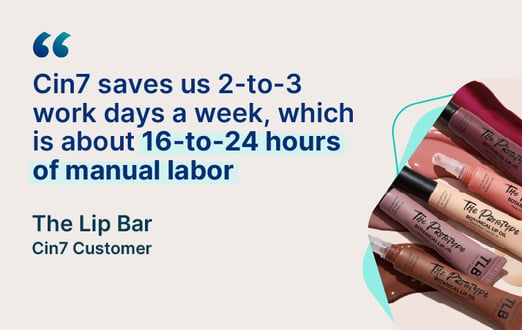
The tricky part is that switching later can mean a full rip-and-replace, right when you're busiest. That's exactly why we say buy for where you're headed, not just where you are. Take The Lip Bar, a beauty brand that switched from Fishbowl to Cin7 to automate inventory and order syncing across channels. The payoff was real time back. "We save two-to-three work days, which is about 16-to-24 hours of manual labor," says Ashley Gilbert, the brand's head of operations and business development. "We don't have to manually upload and sync inventory or upload orders one-by-one, like we did with Fishbowl." That's up to three workdays a week you could spend growing instead of grinding.
How Cin7 Helps Small Retailers Scale
So where does Cin7 fit? We're an IMS, the connected system you grow into rather than out of. Call us "ERP Lite" if you like, just don't call us an ERP. With 700+ integrations across Shopify, Amazon, Walmart, Faire, eBay, and more, your sales channels, warehouse, and accounting all stay on the same page, no manual syncing required.
The smart stuff comes built in. Our ForesightAI demand forecasting runs on 100+ algorithms to help you predict what you'll need before you need it, so fewer stockouts and less cash tied up in overstock. Add POS and multichannel support, plus unlimited inventory locations, and you've got a platform that scales from scrappy startup to full-blown enterprise without forcing you to switch tools halfway.
Just ask The Lip Bar, which won back two to three workdays a week after moving to Cin7. That's the kind of breathing room that lets you focus on what you actually got into business to do: sell great products and delight your customers.
Ready to see it in action? Get a demo and let's find the right fit as you grow.
Frequently Asked Questions
What Inventory App Helps Small Retailers?
There's no single winner, because the right app depends on how you sell. If you're a low-volume, in-store shop, a simple tracker or POS-integrated app can do the job nicely. But if you're selling across multiple channels or scaling fast, a connected system like Cin7 keeps everything in sync and ready to grow with you.
How Much Does an Inventory App Cost?
It runs the gamut. Basic apps can be free, while more capable tools charge monthly. Connected systems like Cin7 Core start at $349 per month. Whatever you're comparing, weigh the total cost of ownership, not just the sticker price. The hours you lose to manual work and the sales you lose to stockouts count too.
Do I Need a Simple App or a Full Inventory System?
If you sell at low volume through a single channel, a simple app is likely plenty. If you're managing multiple channels or locations, or you can feel yourself scaling, a connected inventory management system like Cin7 is the better bet. It saves you from a painful rip-and-replace down the road.
Can I Manage Inventory From My Phone?
Absolutely. Most modern inventory apps and systems, Cin7 included, offer mobile access so you can count stock, scan barcodes, and reorder right from your phone. It's handy whether you're on the sales floor or on the move.
Is Free Inventory Software Really Free?
The software might be, but it comes with limits. Free tiers usually cap your items, users, or locations and leave out key features like multichannel sync and forecasting. It's a fine way to start, just plan to upgrade as your business grows and those limits start to pinch.
More from the blog
View All Posts
Multichannel Order Management System: The Complete Guide
Read More
Cloud Warehouse Management System: How to Choose the Best Software
Read More