








Growing a business is an exciting time, but it can also feel overwhelming. The more sales you receive, the more work it takes to process orders, keep track of inventory, and maintain continual fulfillment.
Hiring people to handle the additional work might seem like the only way forward, but that can actually make it difficult to scale efficiently. If you have to hire more employees every time your orders increase, then sales growth will always lead to significant expense growth.
That said, it does take money to make money. The key to scaling a product business lies in what you spend your money on. Investing in inventory management software (IMS) allows sellers to create inventory efficiency at scale, which delivers valuable cost savings over time and frees up more resources to grow.
Key Takeaways
- Scale Without Headcount: Inventory management software (IMS) allows businesses to increase sales volume without a proportional increase in labor costs.
- Reduce Inventory Distortion: Real-time tracking prevents overstocking and stockouts, which can cost businesses up to 7.2% of total sales.
- Minimize Return Costs: Automation improves order accuracy, avoiding return processing fees that typically range from 39% to 55% of an item's value.
- Operational Efficiency: Features like guided warehouse walk paths can reduce employee walking time by up to 40%.
What Is Inventory Management Software?
Inventory management software (IMS) helps sellers track inventory levels and automate related processes, such as procurement, order management, and reporting. For many sellers, inventory management starts in spreadsheets. While this may be enough to get your business off the ground, it can hold you back as you look to make it to the next level.
In contrast, one of the main advantages of inventory management software is that it empowers sellers to grow without getting trapped under the burden of inventory.
Benefits of Inventory Management Software
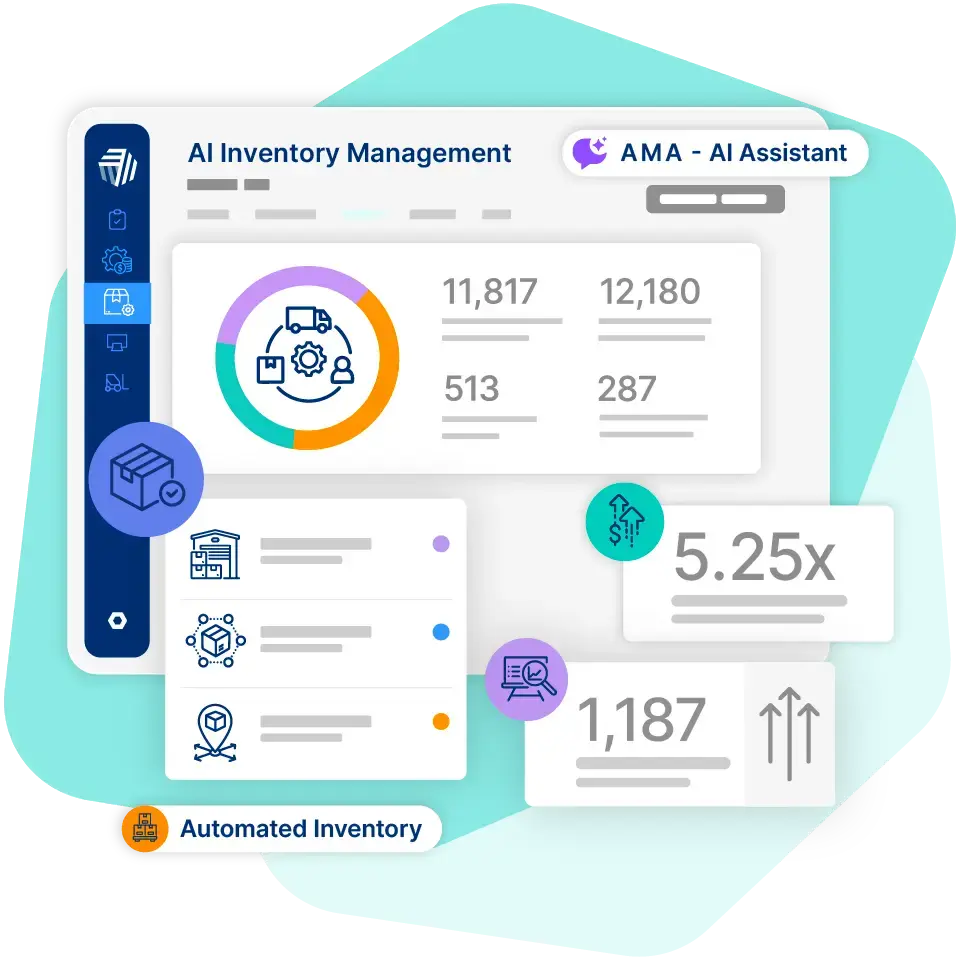
Inventory management software puts you firmly in the driver’s seat—giving you real-time stock accuracy, smoother operations, and happier customers from day one.
Finding the right IMS can transform your business from a company run by highly manual inventory management workflows to an efficient and streamlined operation that empowers sellers to take advantage of economies of scale and grow more cost-effectively.
Here are some of the benefits of inventory management software your business can enjoy:
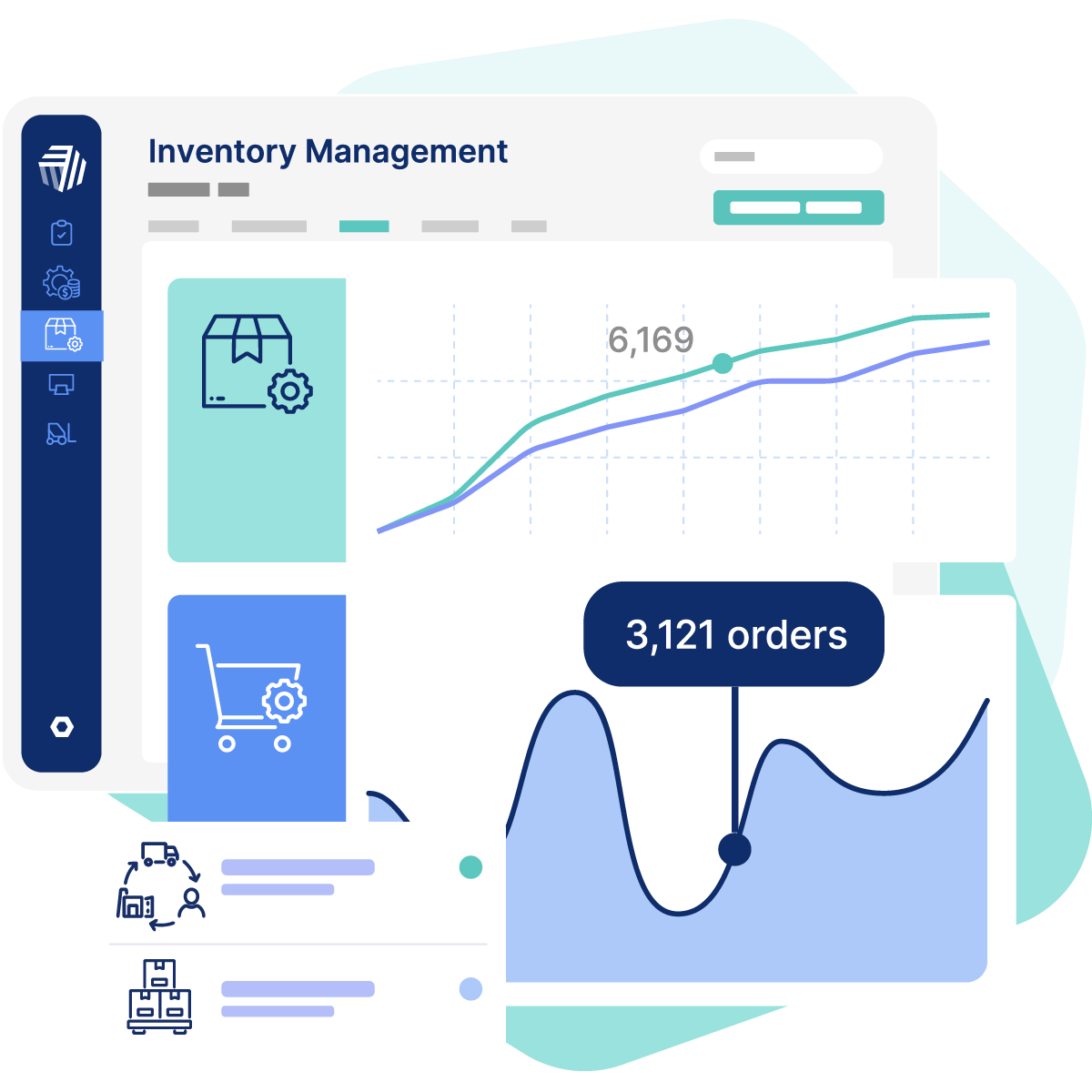
- Accurate inventory data: Automated inventory tracking offers more precise inventory counts that you can access in real time, which means less money spent on purchasing and holding surplus stock.
- Product visibility: See exactly where each item is—every warehouse, truck, or store shelf—in realtime so you can tweak routes, cut storage fees, and keep stock flowing.
- Fewer manual workflows: Use automation to eliminate time-consuming manual tasks, like taking stock or order processing. This frees up time to focus on customer interactions and growth.
- Increased productivity: By automating routine tasks, like tracking stock levels and reordering, you can get more done with fewer people and maintain your business without needing to increase headcount every time your sales volume grows.
- Improved demand forecasting: Leverage historical inventory data and sales metrics, such as inventory turnover and velocity, to generate more accurate demand forecasts and reduce costs associated with overstocking or stockouts.
- Ability to add new sales channels: Easily scale through new sales channels using integrations and real-time data sharing without having to hire more people.
- Data-driven decision-making: Monitor and track inventory performance metrics, such as your inventory turnover ratio and cost of goods sold (COGS), to make better decisions about product mix and pricing so you can improve overall profitability.
- Reduced risk of overselling
- Better customer experience
- Stronger supplier relationships
- More organized warehouse
- Business cost reduction: By streamlining operations, leveraging automation, and increasing inventory accuracy, you can reduce overall costs and have a leaner and more agile company.
How Inventory Management Software Reduces Costs
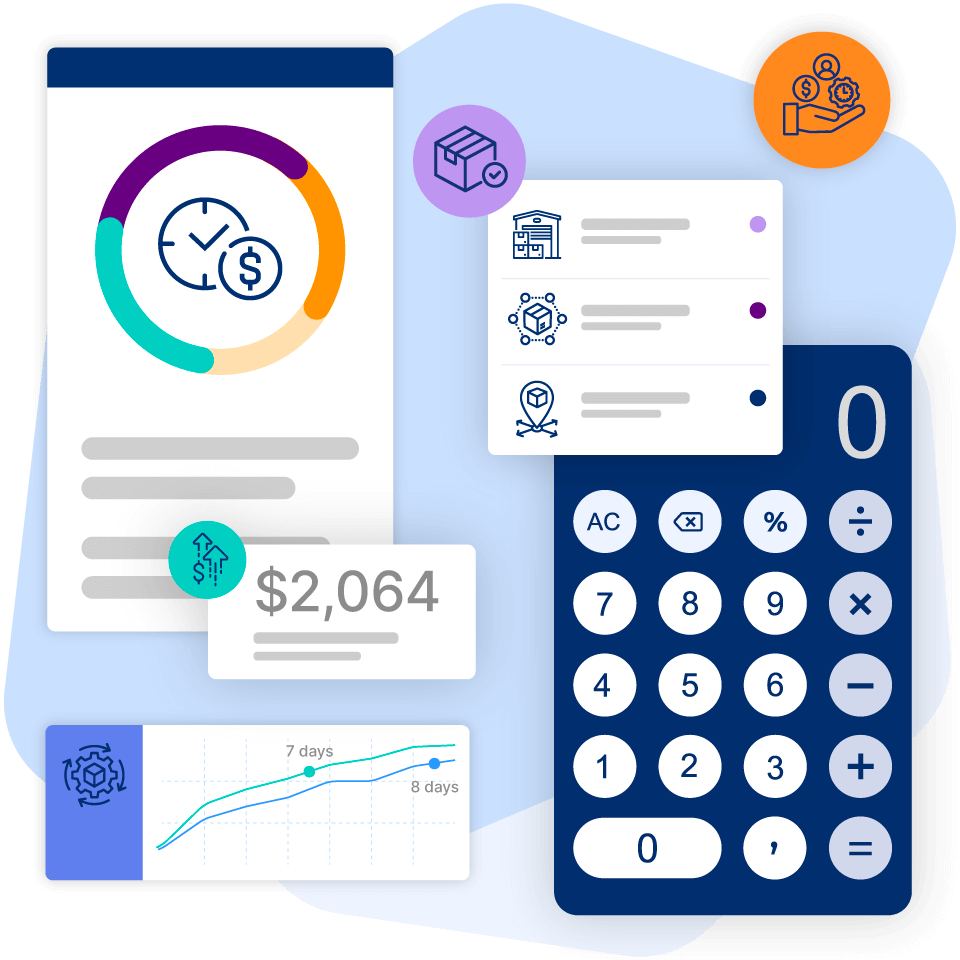
The benefits of investing in inventory management software can include immediate cost savings in three key areas: inventory, order accuracy, and labor costs.
Optimized Inventory Levels
Having too much or too little product can be expensive. A study by IHL Group projected that inventory distortion would cost the retail industry $1.77 trillion in 2023, which is about 7.2% of sales.
Inventory distortion includes issues like excess inventory, stockouts, and inaccurate stock levels. The good news is that it can be prevented with the right tools.
Optimizing inventory through real-time tracking and visibility helps product sellers keep the right amount of inventory on hand. This reduces storage, discounting, and disposal costs associated with overstocking and cuts down on lost sales caused by stockouts.
Cin7 helps you improve purchasing by showing real-time inventory amounts for each item in your purchase order. This gives you the option to remove any line items you don’t need or increase your order for items with lower stock levels.
Say you have a purchase order that includes 50 units of a product with a total price of $3,000, but your real-time stock levels are still high. Removing this line item saves you $3,000 instantly and frees up warehouse space, so you don’t need to expand to hold more items.
By optimizing inventory in this way, you can also reduce overstocking and the costs you’d incur if you had to discount the surplus stock or dispose of the product if it didn’t sell.
Improved Order Accuracy
Incorrect orders don’t just cost your business in terms of negatively impacting customer experience. Fixing order errors involves expenses like return processing, restocking, and reshipping.
One study estimates that the costs associated with a return range from 39% to 55% of the item’s value:
| Item Value | Estimated Return Cost |
|---|---|
| $50.00 | $19.50 – $27.50 |
| $100.00 | $39.00 – $55.00 |
Using an IMS to track inventory and automate order processing reduces costly mistakes caused by human error and manual data entry. Accurate order processing also improves customer satisfaction, helps build loyalty, and encourages repeat purchases.
Reduced Labor Costs
Automating manual and routine workflows with a Cloud-based inventory management system helps your teams increase productivity and accomplish more in less time. Specifically, IMS automation can eliminate physical inventory counts and reduce manual order processing.
Cin7 also makes it easy to receive inventory, keep track of items in the supply chain, and fulfill orders using barcode scanning.
By automating your inventory management process with Cin7, you can scale your company without increasing headcount, which is especially crucial for helping small businesses keep costs low as they grow and expand.
Success Story: For vegan clothing brand Peta + Jain, automating incoming orders through Cin7 saved approximately $130,000 per year in labor and processing costs.
How our Connected Inventory Performance Cuts Costs
Cin7 goes beyond effective inventory management to enable Connected Inventory Performance (CIP) by seamlessly connecting inventory to all other parts of your business. Over time, CIP drives efficiency and delivers cost-saving benefits that free up resources so you can invest in growth, such as plugging in new sales channels or expanding your product line.
Streamlined Procurement
Cin7’s Cloud-based IMS provides real-time insights and user-friendly features to help optimize procurement and right-size your inventory.
You can set automated reorder points to trigger purchase orders and maintain continual fulfillment. By automating order processing and procurement, you can grow without having to worry about the burden of maintaining inventory and fulfilling customer orders.
How Cin7 has helped Advance Global grow profitably
Advance Global automates its inventory management workflows with Cin7, allowing the road safety product seller to reduce stockouts, eliminate manual processes, and scale profitably. Before Cin7, supporting sales growth required hiring more team members, which cut into profit margins.
By transitioning from manual operations to automated inventory control, Advance Global was able to take advantage of growth opportunities while staying lean and keeping labor costs low. Now, the brand can easily double sales without increasing headcount.
Warehouse Optimization
Cin7’s Warehouse Management System (WMS) offers flexible tools to increase packing, picking, and shipping efficiency. More efficient picking helps handle higher sales volumes without increasing headcount.
Features like guided walk paths and dedicated warehouse zones help employees save up to 40% of walking time. Using optimal warehouse layouts reduces or eliminates the need for additional space, lowering rent and storage costs.
Supply Chain Visibility, Collaboration, and Resilience
77% of supply chain professionals called real-time visibility a must-have. Cin7 provides full traceability through the entire supply chain, tracking metrics like inventory turnover time, lead times, and supplier on-time deliveries.
Monitoring these metrics helps identify vulnerabilities and opportunities for efficiency improvements. Reducing lead times enables operation with less inventory, decreasing storage needs.
Cin7’s API and integrations facilitate data sharing with supply chain partners, fostering closer relationships and better performance negotiations.
Improving supply chain visibility and collaboration enables strategies like just-in-time inventory, minimizing costs and freeing cash flow for growth.
Direct Sales Channel Integrations
As your business expands, Cin7 makes it easy to add new sales channels without third-party or ERP software. Its built-in electronic data interchange (EDI) connects you with major retailers like Walmart, Amazon, and Kohl’s, automating order processing and reducing labor costs.
Additionally, Cin7’s 3PL software automates order routing, supporting higher sales volumes without expanding your team. Local 3PL providers can also enable faster deliveries and lower return costs.
For example, Sagely Naturals uses Cin7’s EDI and 3PL integrations to manage multiple sales channels, including big-box retailers and D2C. This allows order processing and inventory syncing to be handled automatically by a single person, simplifying operations.
Take Control of Your Inventory Costs with Cin7
Once sellers experience growth, reinvesting in the business is essential to maintain customer experience, profitability, and expansion. Hiring more staff to handle increased sales can be costly and reduce agility.
Tools like an IMS evolve with your business, avoiding the need to increase headcount at each milestone. Choosing a performance-focused solution like Cin7 enables you to leverage CIP for efficiency at scale, streamlining operations and reducing costs as you grow.
To see how Cin7 can save you money, sign up for a demo today.
Frequently Asked Questions
What is the 80/20 rule in inventory management?
The 80/20 rule says roughly 80% of your sales (and profit) come from about 20% of your products. When you know which items make up that top 20%, you can give them priority—more shelf space, faster reorders, and tighter stock checks.
With our IMS, you can tag those high-value SKUs, track them in real time, and set automatic reorder points. That way, you never run out of your money-makers and you don’t tie up cash in slow movers.
What are the four main inventory management methods?
Most product businesses rely on one (or a mix) of these four methods:
- Just-in-Time (JIT): Bring in stock right before you need it to keep holding costs low.
- Materials Requirement Planning (MRP): Buy raw materials based on your production schedule.
- Economic Order Quantity (EOQ): Use a formula to find the most cost-effective order size.
- Days Sales of Inventory (DSI): Measure how many days, on average, it takes to sell what you have on hand.
Our IMS crunches the numbers for any of these methods and automates reorders so you always carry the right amount of stock.
Which benefit can be derived from software inventory?
Software inventory tracking delivers real-time stock accuracy and automated workflows that reduce labor costs by up to 40% in warehouse operations. This allows businesses to scale sales volume without proportionally increasing headcount.
How can inventory management software be used to improve inventory management?
Inventory management software provides real-time data on stock levels across all locations and analyzes sales trends to optimize reordering. This prevents inventory distortion—which costs retailers 7.2% of sales—by maintaining optimal stock levels and reducing overstocking or stockouts.
What is the main function of inventory management software?
Inventory management software tracks and organizes stock across multiple warehouses and sales channels while automating processes like procurement, order fulfillment, and reporting. It replaces manual spreadsheets with connected systems that sync inventory data in real time.
What is a key benefit of effective inventory management?
Effective inventory management maintains the right stock levels to meet customer demand consistently while avoiding the costs of excess inventory or stockouts. This frees up capital, reduces storage expenses, and protects profit margins by eliminating discounting or disposal of surplus stock.
