Selling on Amazon, Shopify, your own website, and a few retail partners sounds like a growth strategy.
That is until you realize you're managing four separate inventory accounts that don't talk to each other. One oversold item, one frustrated customer, and suddenly that multi-channel expansion feels more like a multi-channel headache.
Multichannel inventory management solves this by centralizing your stock data across every sales channel into one system that updates in real time. This guide covers how it works, the challenges you'll face, and practical steps to get your inventory under control across every platform where you sell.
What Is Multichannel Inventory Management
Multichannel inventory management is the process of tracking and controlling stock across multiple sales channels from one centralized system. If you're selling on Amazon, a Shopify store, and you’re in Target you're managing inventory across multiple sales channels. The challenge? Keeping stock counts accurate everywhere so you don't oversell or run out at the wrong moment.
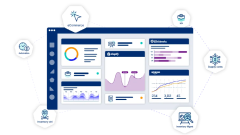
A centralized system acts as your single source of truth. Instead of logging into five different platforms to check what's available, you've got one dashboard showing real-time stock levels across every channel. When someone buys the last unit on Amazon, your Shopify store updates instantly.
Single-Channel vs. Multi-Channel Inventory Management
Selling through one channel keeps things simple. You've got one set of numbers to watch, one platform to update, and fewer moving parts to manage.
Multi-channel changes the game entirely. Suddenly you're juggling stock across multiple platforms. Without synchronization, you're essentially running separate businesses that don't talk to each other.
|
Feature
|
Single-Channel
|
Multi-Channel
|
|
Complexity
|
Simple tracking
|
Requires syncing across platforms
|
|
Growth potential
|
Limited reach
|
Access to more customers
|
|
Stock visibility
|
Easy to monitor
|
Requires centralized system
|
|
Risk of overselling
|
Low
|
Higher without proper tools
|
The tradeoff is clear: multi-channel opens up revenue opportunities, but it demands better systems to keep everything in sync.
Benefits of Multichannel Inventory Management
Real-Time Inventory Visibility Across Channels
You can see exactly what's in stock everywhere you sell, at any moment. No more guessing, no more logging into separate systems to piece together the full picture.
Fewer Stockouts and Overstocks
Accurate counts mean fewer stockouts and less cash tied up in excess inventory gathering dust. Your working capital stays where it belongs and works for you rather than against you.
Faster and More Accurate Order Fulfillment
Orders route to the right warehouse automatically. Customers get their products faster, and your team spends less time fixing mistakes.
Time Savings Through Automation
Manual updates across platforms disappear. Stock levels sync automatically when a sale happens anywhere, freeing your team to focus on growth instead of data entry.
Improved Customer Satisfaction
Customers get accurate availability info and faster delivery. That builds trust, and trust builds repeat business.
Smarter Demand Forecasting with AI
Modern systems use AI-driven demand forecasting to predict what you'll need and when. At Cin7, we've built ForesightAI which helps you stay ahead of demand instead of constantly reacting to it.
Scalability for Business Growth
Want to add Walmart, Faire, or a new retail location? With the right system, you can expand without rebuilding your entire inventory process from scratch.
Multichannel Inventory Management Challenges
Data Fragmentation Across Systems
When inventory data lives in disconnected spreadsheets or separate platforms, you're flying blind. One system says you have 50 units; another says 35. Which one's right? Without a single source of truth, you're guessing.
Overselling and Stock Discrepancies
This kind of overselling happens when channels don't sync fast enough, and it's both common and costly. It frustrates customers and creates operational headaches that ripple through your entire fulfillment process.
Inaccurate Demand Forecasting
Without unified data, demand planning becomes guesswork. You end up either overstocked or scrambling to fulfill orders you can't complete.
Complex Multi-Location Fulfillment
Deciding which warehouse ships which order gets tricky when you have inventory spread across locations. The wrong decision means higher shipping costs and slower delivery times.
Poor Inventory Allocation Across Channels
Putting too much stock in slow channels while fast-moving ones run dry? That's lost revenue hiding in plain sight.
How to Manage Inventory Across Multiple Sales Channels
1. Centralize Your Inventory Data in One Platform
Bring all your stock information into a single source of truth. This is your new foundation. Everything else builds on it. Without centralization, you're just managing chaos more efficiently.
2. Integrate All Sales Channels and E-commerce Platforms
Connect your Shopify, Amazon, eBay, WooCommerce, BigCommerce, retail POS, and wholesale channels so they talk to each other. At Cin7, we offer native integrations with over 700 platforms, including QuickBooks and Xero for accounting.
3. Set Reorder Points and Safety Stock Levels
Define the minimum stock level that triggers a reorder, plus buffer stock for unexpected demand spikes. This keeps you from running out during busy periods.
4. Automate Inventory Updates and Real-Time Sync
Enable automatic stock adjustments the moment a sale, return, or transfer happens. This is multi-channel inventory sync in action, and it's what prevents overselling.
5. Track Performance Metrics Across Every Channel
Monitor which channels sell fastest, which products move, and where you're losing margin. Use this data for smarter inventory allocation decisions.
6. Conduct Regular Inventory Audits
Even with automation, periodic physical counts catch discrepancies and keep your data clean. Think of it as a reality check for your system.
How to Choose the Best Multichannel Inventory Software
1. Assess Your Current Channels and Growth Plans
List where you sell now and where you plan to expand. Your software will need to support both today's reality and tomorrow's ambitions.
2. Verify Integration Compatibility
Confirm the platform connects natively with your e-commerce platforms, accounting software, and any other tools you rely on.
3. Evaluate Real-Time Sync and Multi-Channel Capabilities
Ask how quickly inventory updates propagate. Delays of even minutes can cause overselling during peak sales periods.
4. Consider Ease of Use and Implementation
A powerful system that your team can't figure out won't help. Look for intuitive interfaces and solid onboarding support.
5. Compare Pricing and Scalability
Make sure the pricing model works as you grow. Some platforms charge per channel, per user, or per order volume.
Best Practices for Multichannel E-commerce Inventory Management
1. Start with Your Highest-Performing Channels
Get your best-selling channels dialed in first before adding complexity.
2. Prioritize Integrations Over Manual Workarounds
Every manual process is a potential error. Invest in proper integrations upfront. Trust us, your future self will thank you.
3. Use Data to Allocate Inventory Strategically
Put more stock where it sells fastest. Don't spread inventory evenly just because it's easier.
4. Build Buffer Stock for Peak Seasons
Plan ahead for holidays, promotions, or seasonal spikes so you're not caught short when demand surges.
5. Review and Optimize Regularly
Your channel mix and product performance will shift. Revisit your inventory strategy quarterly at minimum.
How AI and Automation Are Transforming Multi-Channel Inventory
Predictive Demand Forecasting
AI analyzes historical sales, seasonality, and market trends to predict future demand more accurately than manual methods ever could.
Automated Replenishment and Purchase Orders
Systems can automatically generate and even send purchase orders when stock hits predefined thresholds. Less manual work, fewer stockouts.
Intelligent Inventory Allocation Across Channels
AI helps decide how much stock to allocate to each channel based on sales velocity and fulfillment costs. It's smarter allocation without the spreadsheet gymnastics.
Take Control of Your Multi-Channel Inventory with Cin7
We built Cin7 for businesses selling across multiple channels who want to stop juggling spreadsheets and start scaling with confidence. Our IMS has over 700 integrations including Amazon, Shopify, Walmart, QuickBooks, and Xero! That means your inventory stays synced everywhere you sell.
With AI-driven forecasting, real-time visibility, and automation that actually works, you can focus on growth instead of firefighting stock issues. Get a demo and we'll show you around.
FAQs About Multichannel Inventory Management
What's the difference between multichannel and omnichannel inventory management?
Multichannel means selling on multiple platforms. Omnichannel adds a unified customer experience across all channels. The inventory management principles are similar, but omnichannel focuses more on seamless customer journeys.
How often should inventory sync across sales channels?
Ideally in real-time or near real-time to prevent overselling. At minimum, syncing every few minutes during active selling hours keeps you out of trouble.
Can small businesses benefit from multichannel inventory software?
Absolutely. Small businesses often feel the pain of manual tracking most acutely, and the right software scales with you as you grow.
How long does it typically take to implement a multichannel inventory management system?
Implementation time varies based on your complexity, but many cloud-based solutions can be up and running within a few weeks with proper onboarding.
How do you handle product returns when selling across multiple channels?
A good multichannel system tracks returns by channel and updates inventory automatically. Returned items go back into available stock or get flagged for inspection with manual updates.