








Major shopping holidays like Black Friday, Cyber Monday, and Mother’s Day continue to bring flocks of customers ready to spend, despite inflation. In 2025, Adobe reports US shoppers spent a record $44.2 billion online during Cyber Week (Thanksgiving through Cyber Monday), up 7.7% year over year. The full November and December season reached $257.8 billion online, up 6.8%.
Holiday shoppers don’t wait around. If you’re out of stock, they’ll happily buy from someone who isn’t. That’s why seasonal demand forecasting matters: when you know what’s coming, you can stock up with confidence instead of crossing your fingers.
Whether you’re a manufacturer, distributor, brick-and-mortar store, or e-commerce retailer, shopping holidays are excellent opportunities to increase your sales and boost revenue. That is, as long as you’re able to manage sudden increases in seasonal and holiday consumer demand well.
If you can’t respond to increased demand quickly, you risk higher costs, lower profits, and poor customer experiences that lead to lost sales.
The right technology helps you respond to shifting demand, manage seasonal stock, and predict what’s next, so your busy season pays off.
Let’s dig into the common challenges associated with seasonal demand forecasting and inventory management, as well as solutions to help you master major seasonal shifts.
Key Takeaways
- Seasonal demand forecasting uses past sales and market signals to predict demand spikes around holidays and events.
- The most common challenges are messy inventory data, slow scaling, bottlenecks, and supply chain delays.
- Lock in key peak-season decisions no later than Q3 so you have time to secure stock, staff, and storage.
- Safety stock and real-time inventory data help you avoid both stockouts and dead stock.
- An IMS like Cin7, with ForesightAI, automates forecasts and reorder points so you’re not guessing.
Here’s what we’ll cover:
> What is seasonal demand forecasting?
> How to do seasonal demand forecasting
> 7 common seasonal demand forecasting challenges (and how to fix them)
> Peak-season inventory planning strategies
> What to do with excess inventory after the holidays
> How Cin7 helps you master seasonal demand forecasting
> Seasonal demand forecasting FAQs
> Final thoughts: Turn seasonal peaks into profit
What Is Seasonal Demand Forecasting?
Seasonal demand forecasting is the process of predicting how customer demand will rise and fall during recurring periods, like the holidays, back-to-school, or summer. It uses your past sales, growth trends, and outside signals so you can stock the right products, in the right amounts, at the right time.
Beyond forecasting sales during the holiday season, it can also be used to help sellers prepare for any other busy times of the year. For instance, swimwear sellers might use it to prepare for spring and summer, when the weather warms up and people start dreaming of the beach.
Think of it as the seasonal side of demand planning. Get it right, and you’ll sail through peak season. Get it wrong, and you’re stuck with empty shelves or a warehouse full of unsold sweaters.
How to Do Seasonal Demand Forecasting (Step by Step)
You don’t need a data science degree to forecast seasonal demand. You need good data and a repeatable process. Here’s how to build one, and if you want to go deeper, check out these inventory forecasting formulas with worked examples.
1. Analyze Historical Sales
Pull at least two years of sales by SKU, week by week. Flag one-off events, like stockouts or flash sales, so they don’t skew your baseline. Patterns that repeat year after year are your best clues.
2. Apply Year-Over-Year Growth
Take last season’s sales for each SKU and adjust for how fast you’re growing. For example, if you sold 1,000 units last December and you’re growing 10% a year, plan for about 1,100. Simple, but powerful!
3. Smooth the Noise With Moving Averages
A moving average takes the average of your last few periods, like three months, to smooth out random spikes. It shows you the real trend hiding under the day-to-day bumps.
4. Calculate a Seasonal Index
A seasonal index shows how much a given month sells compared to an average month. Divide a month’s average sales by your overall monthly average. An index of 1.5 means that month runs 50% above normal, so multiply your baseline forecast by 1.5.
5. Layer In External Signals
Your history doesn’t know about next month’s promo or a new marketplace event. Factor in your marketing calendar, supplier lead times, social trends, and the wider economy. And focus your energy on the SKUs that drive most of your revenue (that’s the 80/20 rule at work).
7 Common Seasonal Demand Forecasting Challenges (and How to Fix Them)
During holiday seasons and special events, consumer demand may spike suddenly. The added volatility makes sales harder to forecast while also putting extra pressure on your operations to fill many more orders in a short time.
Here are the top seven seasonal challenges that make it more difficult for sellers to predict and meet customer demand accurately.
Imprecise Inventory Data
When you plan for a demand spike, aim for the sweet spot: enough stock to fill orders, but not so much you can’t sell it.
It’s essential to have access to accurate stock levels in real-time in order to achieve accuracy in your seasonal demand forecasting.
If you don’t know what you already have, smart holiday inventory management for Black Friday (or any major shopping holiday) is nearly impossible. Spreadsheets and outdated software make it harder to see real-time stock levels, so it’s tough to confidently order what you actually need.
The fix: Sync every sales channel and warehouse into one system so your stock counts update in real time.
Difficulty Scaling Production Levels
Ramping up production ahead of seasonal peaks like Valentine’s Day, Mother’s Day, and Christmas is tough. Keeping quality high is even harder, especially for products with a short shelf life.
Waiting until after demand occurs to scale up your operations can lead to problems with staffing. In a 2024 Ivanti survey of 800 supply chain professionals across the US, UK, France and Germany, 31% of workers put the labor shortage among their top three challenges. When trying to scale up on short notice, those widespread labor shortages become particularly difficult to deal with due to compressed timelines.
For e-commerce retailers, these challenges may look like understaffed warehouses and a lack of delivery drivers. For manufacturers, it may be undertrained seasonal forklift operators, materials running out mid-production, or no room for extra stock waiting to ship.
Either way, a lack of resources, including staff, can lead to orders piling up, dangerous working conditions, shipping delays, unhappy customers, and lost profits.
The fix: Map out your peak-season production and staffing needs months ahead. Then hire and train early so you’re not scrambling when orders spike.
Operational Bottlenecks
Bottlenecks are never a good thing for your operations. But during big sales and peak seasons like Christmas, they’re more likely to happen, and they hit your business harder.
A single bottleneck can negate the rest of your efficiency efforts. For example, suppose you maximize staffing in your order picking and packing department but understaff your inventory stockers. In that case, your order pickers won’t have anything on the shelves to pick, pack, and ship because the stockers can’t keep up.
From a technology standpoint, using spreadsheets and manual tracking processes creates bottlenecks as each step must wait on manual counts and data entry.
Both physical and technological inefficiencies in your operations can cause additional costs that eat into your profits. They can also result in delayed order fulfillment, creating a negative impression on customers and may even lead them to switch to a competitor’s brand.
As such, sellers need to optimize production processes, reduce lead times, and eliminate waste to avoid bottlenecks and stay profitable during busy seasons.
The fix: Staff each step of your workflow to match the volume your forecast predicts. Swap manual counts for automated tracking so no step waits on data entry.
Unpredictable Demand Spikes
Unlike regular shopping seasons, sales and holidays create large spikes in demand that sellers only have a short window to capture. With so little time to react, you have to prepare ahead by predicting how much demand will rise.
That being said, seasonal changes in demand can be volatile due to the economy and shifting consumer demand patterns. For example, is chartreuse or orange the new black this season?
Without the right historical sales data and demand forecasting models, it can feel almost impossible to know what sales volume to prepare for. If you overestimate, you can end up with an overstock of dated products, and if you underestimate, you’ll miss out on sales opportunities.
The fix: Use the forecasting methods above, and keep a safety stock buffer on your best sellers so a surprise spike doesn’t wipe you out.
Supply Chain Disruptions
Blue Yonder’s 2024 Supply Chain Executive Survey found 84% of global businesses had experienced supply chain disruptions in the past year (85% in the US).
Disruptions like these can have serious consequences for sellers. Uncertainty adds pressure: 78% of manufacturers named trade uncertainty their top concern (NAM Q3 2025 survey, cited in Deloitte’s 2026 Manufacturing Industry Outlook).
Unfortunately, from a customer’s perspective, it doesn’t matter where the products were held up. Your customers hold you responsible when they can’t get what they want when they want it.
Imagine you forecast perfectly for Mother’s Day and order the right amount of inventory for your sales. What happens if one of your vendors can’t keep up with demand and delivers your products late? Or there might be a shipper strike, and the shipment languishes on a loading dock somewhere?
At the end of the day, a late order still reflects badly on your brand. That lowers the chance the shopper comes back. It can also cut into revenue if customers cancel or return orders for gifts that didn’t arrive on time.
The fix: Track supplier lead times and on-time performance, and build buffer time into every peak-season order. Keep a backup supplier lined up for your most critical items.
Unclear Communication
When your internal departments aren’t clear on what each other needs or your suppliers aren’t sure what you need, problems can snowball. During major sales seasons, when timelines get tighter and customer expectations are higher, miscommunication problems are especially harmful.
In situations where there are short-term spikes in customer demand, you need to know you can communicate and collaborate effectively internally and externally. Sharing accurate information freely keeps everyone’s expectations realistic. That way, products and supplies arrive on time, get where they need to go, and you can fulfill orders fast.
The fix: Give every team and supplier access to the same real-time data, and agree on peak-season timelines before the rush starts.
Outdated Technology
If you can’t rely on your inventory and order management system, it’s almost impossible to forecast demand accurately and handle higher sales volume. Spreadsheets and old software aren’t just time-consuming. They can leave you with inaccurate data, and they make it hard to integrate and scale.
Ultimately, inadequate technology solutions can result in sluggish operations and limit your ability to take advantage of seasonal demand changes.
The fix: Move to an IMS that connects your sales channels, warehouses, and accounting, so your forecasts run on data you can trust.
Peak-Season Inventory Planning Strategies That Work
A great forecast is only half the job. Here’s how to turn it into a plan that holds up when orders start flying.
Plan Early
Plan months ahead, and lock in key decisions no later than Q3 for a holiday peak. Suppliers respond better to six months’ notice than six weeks. Early planning gives you time to place supplier orders, confirm lead times, and fix gaps before they become emergencies.
Build a Safety Stock Buffer
Safety stock is your cushion for surprise demand or late deliveries. A common formula is (max daily sales × max lead time in days) minus (average daily sales × average lead time in days). Start with your best sellers, then try tiered safety stock for peak season.
Use Preorders to Test Demand
Preorders show you real demand before you commit to big orders. They can also bring in cash early, which helps fund your peak-season stock.
Secure Warehouse Space
More stock needs more room. Book short-term or overflow storage early, and move fast sellers closer to packing stations.
Staff Up and Train Early
Hire seasonal help well ahead of the rush. Train them on your systems before the first big order lands, not during it.
Get Your Logistics Ready
Confirm carrier capacity and shipping cutoff dates. Share those dates with customers early so nobody’s surprised in late December.
Keep Cash Flow in Check
Buying peak-season stock ties up cash long before the sales come in. Stagger your purchase orders, negotiate payment terms with suppliers, and tie each reorder to your forecast. For more ideas, here’s how to manage holiday cash flow so your money isn’t just sitting on a shelf.
What to Do With Excess Inventory After the Holidays
The rush is over, but your work isn’t. What you do in January sets you up for next year.
- Compare forecast vs. actuals: Note which SKUs beat or missed your forecast and why.
- Clear excess stock fast: Bundle slow movers with best sellers, run targeted markdowns, or sell through wholesale channels.
- Plan for returns: Per the NRF, retailers expected about 17% of 2025 holiday sales to be returned, and most returns land in January. Smart e-commerce returns management gets sellable items back on the shelf fast.
- Update next year’s forecast: Feed this season’s data back into your model while it’s fresh.
Holding too much inventory isn’t harmless. It ties up cash, eats warehouse space, and risks becoming dead stock. Here’s how to avoid overstocking and dead stock next season.
How Cin7 Helps You Master Seasonal Demand Forecasting
Cin7 is an inventory management system (IMS) built around Connected Inventory Performance. That means your data works for you across every sales channel and location, all the time.
Here’s how Cin7 Core helps you tackle each challenge above and make the most of every peak season.
Real-Time Inventory Data
Systems like Cin7 Core ensure that you know your stock levels at all times and across all locations without the headache of juggling Excel sheets.
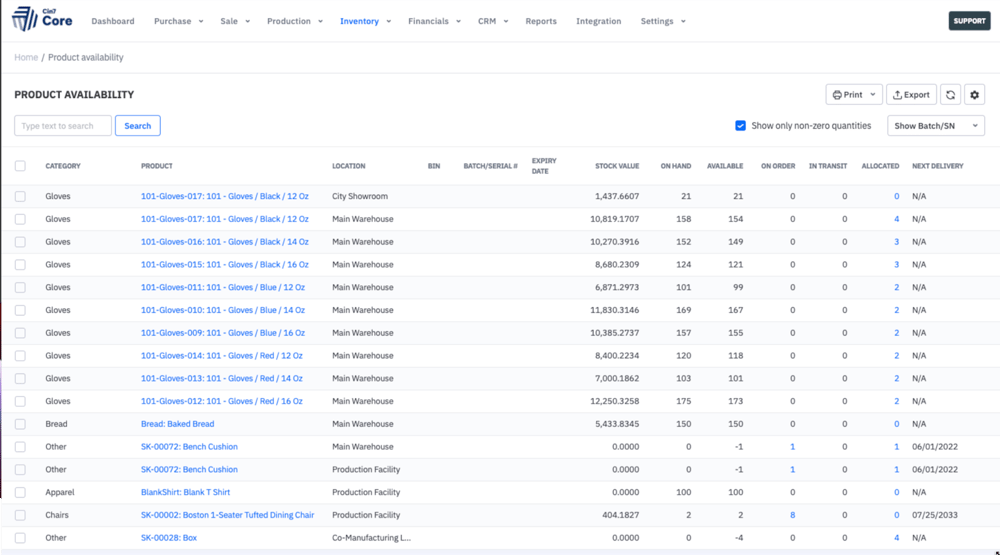
It can also analyze your inventory turnover ratio, lead times, and seasonal patterns to help you determine optimal seasonal inventory levels during busy seasons. With the right data, you can minimize out of stock products, reduce excess inventory, control costs, and improve customer satisfaction.
Agile Scaling
With Cin7 Core, you can better manage your labor and machinery resources for limited downtime. It maps the machinery, equipment, and people each job needs, then suggests schedules that hit deadlines without overloading your team.
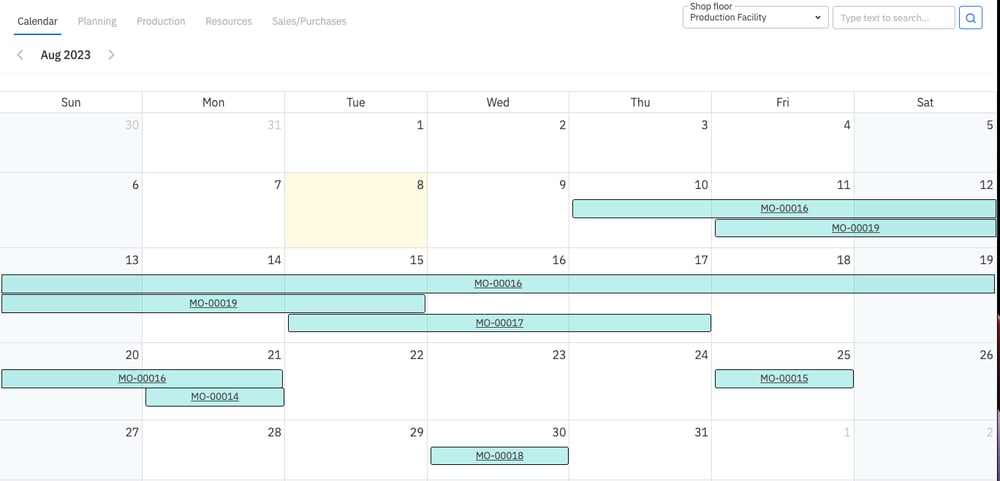
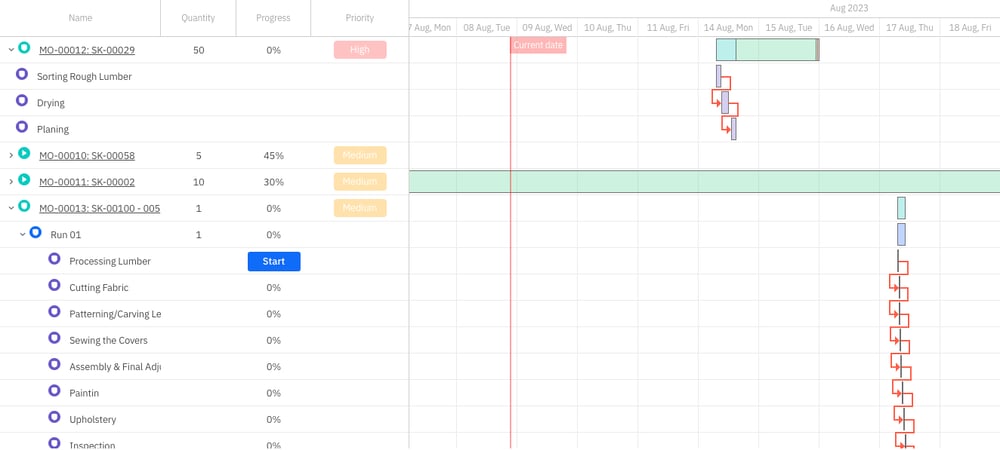
View your plan as a calendar or a Gantt chart to see every production step and the work orders already scheduled. Set a requested delivery date or planned start date, and the system suggests the best schedule for each order. To reschedule, just drag and drop the order, and Cin7 Core blocks any change that would miss the required-by date.
Automated Material Requirements Planning (MRP)
Using Cin7 Core’s material requirements planning (MRP) helps automate and optimize your planning and scheduling so you’re not relying heavily on manual processes. Automated MRP turns your production plan into a list of subassemblies, parts, and raw materials, plus a schedule to get it all done.
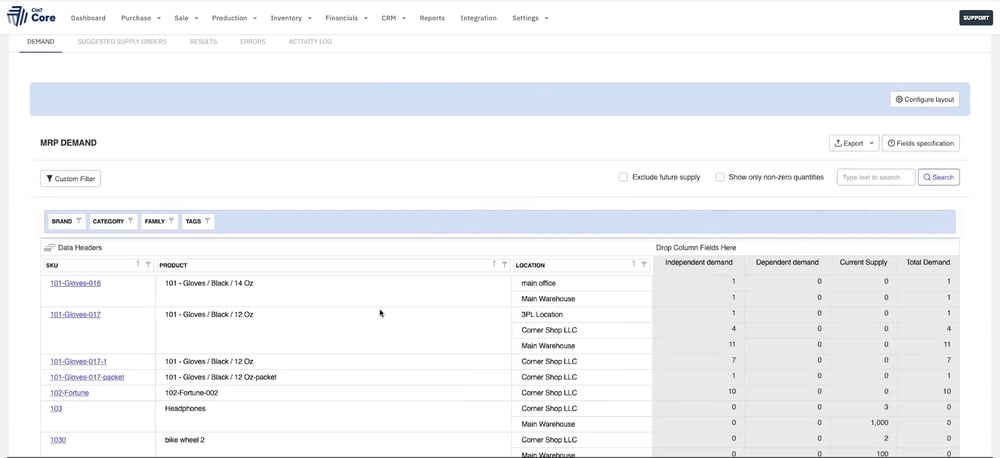
MRP also helps managers size up labor and supply needs from real production data. That means smarter decisions, smoother operations, and a faster response when demand spikes.
Accurate Demand Forecasting With ForesightAI
Good forecasting gives you a head start on demand surges. It uses your existing data to estimate what you’ll need well before customers place their orders.
Cin7 Core analyzes past sales data to identify patterns, trends, and seasonal shifts that improve forecast accuracy. By taking seasonality and metrics like lead time into consideration, the system helps improve production schedules and ensure material availability.
You can also tap into Cin7’s ForesightAI, our built-in, AI-driven forecasting tool. It uses machine learning on your sales history to build SKU-level forecasts, then calculates reorder points and quantities for you. Less spreadsheet wrangling, more time to actually run your business!
Cin7 customer CaliWoods puts it simply: “ForesightAI was probably the big page turner for us. It’s super, super helpful.”
Want to check the math behind automated reordering? Here’s how the reorder point formula works.
Supply Chain Visibility
Cin7 Core helps you take an automated and data-driven approach to your vendor and supply chain management. This way, you can identify which vendors are the most reliable and take their historical performance into account when you place inventory orders.
Regular vendor audits and historical data in Cin7 show you real lead times, so you can adjust and maintain a positive customer experience.
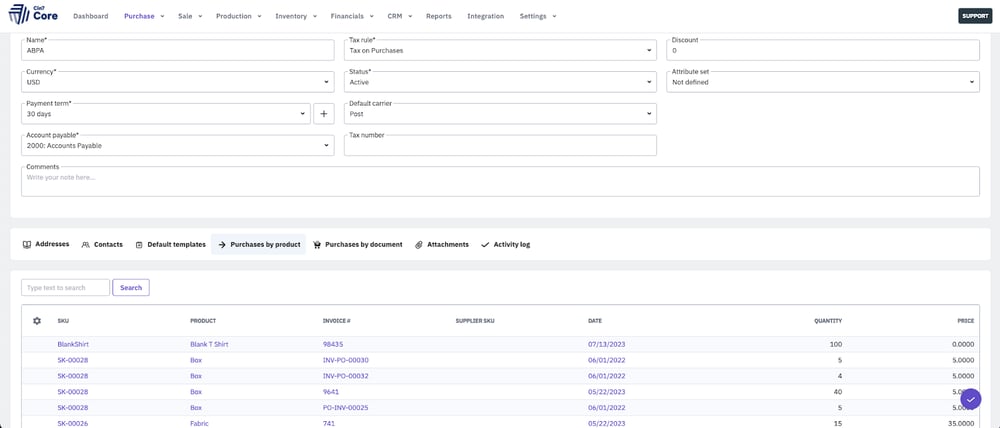
Cin7 also integrates with Anvyl (now Sage Supply Chain Intelligence).
Together, that gives managers more supply chain visibility.
Single Source of Inventory Data
One source of truth for your inventory is critical, especially when demand is high and the pressure to deliver is on.
With Cin7 Core, every team can turn to one system for up-to-date production orders, work orders, inventory levels, and more.
Cin7 Core puts information at your fingertips like:
- Are purchase orders showing up on time?
- Are production runs on schedule?
- Is there enough stock to fulfill incoming orders?
- Are there enough human resources to fulfill orders on time?
Insights from real-time data allow you to communicate clearly and proactively address any issues so you can resolve them before they impact your customer service.
Real Results: How Alaffia Handles Seasonal Demand
Natural beauty brand Alaffia needed better inventory visibility to keep up with seasonal demand. With Cin7, its “inventory visibility took a big leap forward, helping the Alaffia team reduce stockouts and protect revenue.”
The team can now “anticipate shortages more than four weeks out, ensuring expedited purchases.” And when seasonal demand arrived earlier than expected one year, they used Cin7 to change their fulfillment flow. See how Alaffia anticipates shortages more than four weeks out.
Seasonal Demand Forecasting FAQs
What Is Seasonality in Forecasting?
Seasonality is a demand pattern that repeats at the same time each year, like a holiday spike or a summer slowdown. In forecasting, you measure that pattern and build it into your predictions. That way, you’re not caught off guard when the same rush comes around again.
When Should You Start Preparing for Peak Season?
For a holiday peak, lock in key decisions no later than Q3, with supplier and warehouse prep wrapped up by July or August. That gives you time to review last year’s sales, place supplier orders, and line up storage and staff. For Black Friday and Cyber Monday, that means summer, not October!
How Much Safety Stock Do You Need for Peak Season?
It depends on how much your demand and supplier lead times swing. A common formula is (max daily sales × max lead time) minus (average daily sales × average lead time). Quick rules of thumb are a fine starting point, but the formula fits your actual data better.
How Do You Clear Excess Seasonal Inventory?
Act early, before it turns into dead stock. Bundle slow movers with best sellers, run targeted markdowns, or sell through wholesale channels. Then use what you learned to tighten next year’s forecast.
How Can You Improve Seasonal Demand Forecasting Accuracy?
Start with clean, real-time data from every channel. Combine at least two years of sales history with growth trends and external signals, like promotions and lead times. Then compare your forecast to actual sales after each season and adjust.
What Are the Best Tools for Seasonal Demand Forecasting?
Spreadsheets work when you’re small, but they get messy fast. An IMS with built-in forecasting, like Cin7 with ForesightAI, pulls your sales data together and automates forecasts and reorder points. Look for a tool that connects to all your sales channels.
What Are the Four Types of Demand Forecasting?
There are four main types: qualitative, quantitative, trend, and seasonal. Qualitative forecasting leans on expert judgment and market research, while quantitative forecasting uses your historical sales data. Trend forecasting tracks long-term growth or decline, and seasonal forecasting captures the peaks and dips that repeat each year.
How Do You Calculate a Seasonal Forecast?
Start with a deseasonalized baseline (what you’d expect to sell in an average month), then multiply it by that month’s seasonal index. For example, if a typical month brings 400 sales and December’s index is 1.5, plan for about 600 units in December. For the full method, see our step-by-step guide to seasonal demand forecasting.
What Is the Golden Rule of Forecasting?
Be conservative. That’s the takeaway from “Golden Rule of Forecasting: Be Conservative,” a 2015 Journal of Business Research paper by Armstrong, Green, and Graefe. They argue forecasts should stick to what’s already known about the situation and about forecasting methods. In practice, ground your forecast in real sales history instead of betting the warehouse on one hot trend.
What Are Some Examples of Seasonal Demand?
Think gifts and decorations for the winter holidays, chocolate and flowers for Valentine’s Day, and school supplies in late summer. Heaters and coats sell fast when the weather turns cold. Even everyday products have seasons, like grills in summer or fitness gear every January.
What Does It Mean to Forecast Demand?
Forecasting demand means estimating how much of each product your customers will buy over a set period, like the next month or quarter. It blends your sales history with what you know about upcoming promotions, trends, and market conditions. Seasonal demand forecasting is one piece of that bigger picture, zooming in on the predictable peaks and dips.
Final Thoughts: Turn Seasonal Peaks Into Profit
If you’re not prepared for the challenges of seasonal demand increases, holiday seasons can be incredibly frustrating for sellers. The good news is that once you know the most common challenges, you can plan ahead with the right tools. That means confident inventory and production planning, happy customers, and more sales when demand spikes.
Ready to take the guesswork out of peak season? Get a demo and see how Cin7 and ForesightAI can help you plan smarter.
Prefer to explore on your own? Experience a free trial of Cin7 Core today and discover how the right solution can help you manage less and sell more.
More from the blog
View All Posts
6 CPG Holiday Inventory Management Challenges and How to Solve Them
Read More
Christmas in July: Preparing for Q4 sales
Read More