If your team feels like it’s constantly reacting to stockouts, excess inventory, or surprise demand spikes, the problem may not be your forecasting skills. It may be your forecasting system.
As e-commerce and multi-channel brands scale, traditional spreadsheet-based inventory forecasting begins to crack. What worked at 50 SKUs doesn’t hold up at 500. Lead times fluctuate. Promotions distort demand. Cash gets tied up in the wrong products.
And suddenly, inventory planning becomes a weekly fire drill.
AI-powered inventory forecasting is changing that, not by promising perfect predictions, but by narrowing uncertainty, improving demand planning, and giving operators back control.
Why Traditional Inventory Forecasting Breaks as You Scale
Manual forecasting often starts in spreadsheets. And at first, it works.
But growth multiplies complexity. You’re dealing with
- Determining demand across multiple channels (Shopify, Amazon, wholesale, retail)
- Vendor lead times swinging from 45 to 110 days
- Variants, bundles, and multipacks impacting sales velocity across SKUs
- Stockouts creating false demand signals
- New product launches with limited historical data
Spreadsheets struggle to manage dynamic, real-time inputs across channels and locations.
Some operators end up spending 6–16 hours per week pulling reports from disconnected systems before analysis even begins. That’s nearly two full workdays lost to reconciliation.
The Hidden Cost of Manual Demand Forecasting
When brands try to improve inventory forecasting accuracy, they often focus only on the math.
But the deeper cost of manual forecasting is opportunity cost.
Every hour spent:
- Reconciling spreadsheets
- Fixing broken formulas
- Manually calculating reorder points
- Validating inventory across systems
Is an hour not spent:
- Negotiating supplier terms
- Planning category expansion
- Aligning with marketing before a promotion
- Monitoring cash flow impact
Manual forecasting isn’t just time consuming. It traps teams in reactive mode.
Modern AI-Powered Inventory Forecasting Isn’t About Perfect Accuracy
Here’s the shift that changes everything. Modern demand forecasting software isn’t about predicting perfectly. It’s about narrowing the range of uncertainty.
Markets move too fast for static planning. Your lead times are fluctuating, demand is spiking, suppliers are changing, and so is your cash flow..
You need to know what is happening now while spreadsheets tell you what happened last month.
AI-powered inventory forecasting helps you understand what’s most likely to happen next.
Instead of relying on one static projection, AI-powered forecasting systems:
- Analyze multi-channel sales velocity
- Normalize demand affected by stockouts
- Recalculate lead-time variability in real time
- Track forecast bias (over- and under-forecasting trends)
- Surface slow-moving and obsolete inventory (SLOB)
- Evaluate multiple forecasting models simultaneously
This transforms planning from guessing off a single number to managing probability.
How AI Forecasting Reduces Stockouts and Overstock
When AI inventory forecasting integrates with your inventory management system, tangible improvements happen quickly.
1. Smarter Reorder Planning
Reorder recommendations adjust dynamically as demand and lead times shift. This means less last-minute emergency POs.
2. Real-Time Multi-Channel Visibility
Inventory updates automatically across e-commerce, marketplace, and retail channels, eliminating blind spots.
3. Early Risk Signals
Demand deviations are flagged earlier, giving teams time to respond before stockouts or overstock pile up.
4. Stronger Cash Control
Purchase timing becomes intentional. You can avoid overbuying during uncertain lead time swings.
The goal isn’t perfection. It’s fewer surprises, fewer rush fees, and fewer “how did we miss that?” moments.
From Reactive to Proactive Inventory Planning
High-performing inventory teams don’t treat forecasting as a once-a-month spreadsheet update. They review key demand signals weekly, compare forecast versus actual performance to monitor bias, and treat vendor reliability as a live variable rather than a fixed assumption. They connect forecasting decisions directly to cash flow impact and focus their attention on high-risk SKUs instead of micromanaging every single item.
Most importantly, they align finance, sales, and operations around one shared view of demand.
When forecasting improves, replenishment becomes predictable instead of reactive. Transfers are scheduled intentionally rather than out of panic. Warehouse workflows stabilize, and the overall mental load on the team decreases.
AI forecasting doesn’t remove human judgment. It elevates it. Teams are no longer buried in manual data gathering and reconciliation and can focus on strategic growth.
Why Inventory Planning Automation Becomes Essential at Scale
The more complex your catalog becomes, more SKUs, more seasonality, more channels,the more valuable automation becomes.
Inventory planning automation ensures:
- Forecasts update as demand shifts
- Lead-time changes are factored immediately
- Sales, ops, and finance operate from the same data
- Risk is surfaced early
That’s not a luxury feature. It’s infrastructure.
How Cin7 ForesightAI Transforms Inventory Forecasting
Modern forecasting requires more than better spreadsheets. It requires infrastructure that continuously analyzes demand signals and adapts as conditions change.
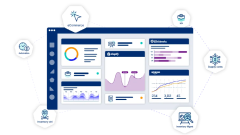
That’s exactly where Cin7 ForesightAI comes in. ForesightAI is Cin7’s AI-powered demand forecasting engine, built specifically for growing multi-channel brands. It works directly inside the Cin7 platform, using live inventory, sales, purchasing, and lead-time data to generate smarter forecasts and reorder recommendations.
Instead of relying on a single static model, ForesightAI evaluates multiple forecasting algorithms and recalculates projections as new data flows in.
It:
- Normalizes demand even when stockouts distort historical sales
- Accounts for multi-channel velocity differences
- Adjusts for vendor lead-time variability
- Surfaces forecast bias so teams can correct patterns
- Identifies slow-moving and obsolete inventory
- Generates dynamic reorder recommendations
This is the key shift:
Spreadsheets show you what happened. ForesightAI shows you what’s most likely coming up next and how confident you can be in that projection.
Instead of asking, “What should we buy?” Teams using ForesightAI ask, “What’s most likely to run out and when?” That probability-based approach changes how inventory teams plan replenishment, manage risk, and protect cash.
See ForesightAI in Action
In our recent session on AI-powered inventory forecasting, we demonstrated how Cin7 + ForesightAI help brands:
- Reduce stockouts
- Avoid over-purchasing
- Automate reorder planning
- Surface demand shifts earlier
- Reclaim 10+ hours per week from manual forecasting
If you're evaluating inventory forecasting software or looking to improve demand planning across channels, the recording walks through exactly how ForesightAI works inside Cin7.
👉 Watch the webinar recording.
Because forecasting shouldn’t feel chaotic.
With Cin7 and ForesightAI, inventory becomes something you steer — not something you survive.